Krallice will unleash their new studio album, Scour Order, on September 18th via Profound Lore Records.
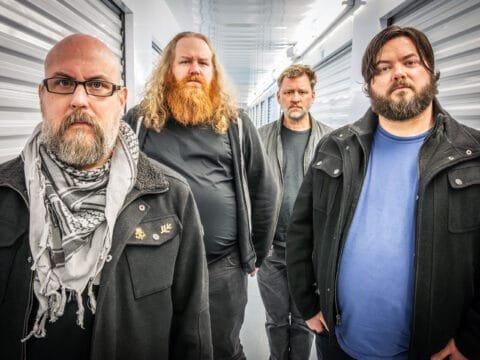
Standing among the most prolific bands in black metal, Krallice is Mick Barr, Colin Marston, Nicholas McMaster, and Lev Weinstein.
Following the release of Scour Order, the band will embark on their first ever European tour, set to run from October 8th through November 7th. Link to dates below.
Krallice began in 2007 as a collaboration between you and Mick Barr in New York City, later expanding into a full quartet. Looking back nearly two decades and more than a dozen albums later, how has the band’s original vision evolved, and what core elements from those early sessions still define your approach today?
I think calling it an “original vision” is maybe too strong. Mick and I just wanted to try making a black metal album together, and everything that’s happened since has an intuitive agenda-less evolution. The four of us just have a lot of fun creating music together and letting the creative process draw us in various directions. Maybe a core element established early on was just to let the focus be on creation rather than all the other aspects of having a rock band.
Your music is renowned for its dense, highly technical, and progressive black metal style—featuring intricate multi-tracked guitars, complex structures, and constant experimentation. Can you walk us through your typical songwriting and recording process at Menegroth (The Thousand Caves), and how the roles of each member (including shifting instrumentation and vocals) contribute to that density?
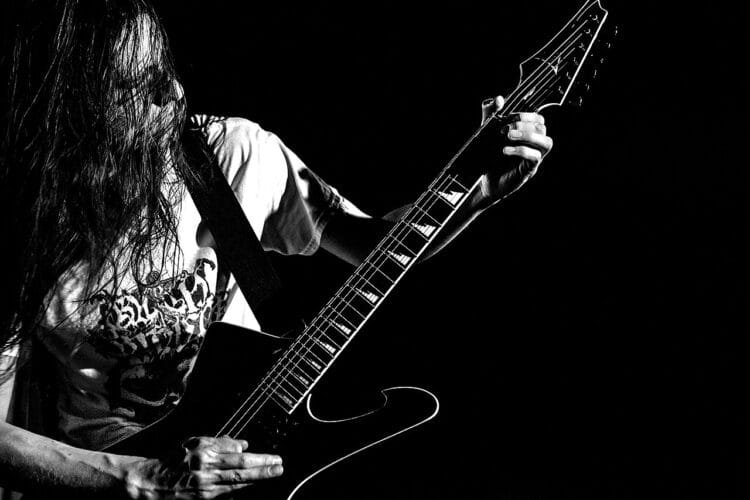
Just to be clear, we don’t do much with multitracking guitars and adding extra parts in the studio. But on the albums that feature me and Mick on guitars, we usually each have our own distinct guitar parts. Our new album is pretty much a live recording (although some guitar parts were replayed and replaced after the initial tracking, and vocals were overdubbed). For our older albums, we also recorded live but then double both guitar parts standing in front of the amps. I’ve been trying to get away from mixing with 4 guitar tracks (2 is plenty!), so for the last 7 albums and EP, we’ve just had one guitar each for Mick and I, or regular left and right doubled guitars for the albums where McMaster plays guitar.
Our typical method of writing begins with either me, Mick or McMaster bringing in a demo with all riffs and a structure completed on one instrument (guitar, bass or synths). Then we usually write our own parts on top of that and collaborate on drums and fine tuning the structure. My demos often come with drum ideas too since I have a hard time restraining myself from imagining drum arrangements. In the past, vocals and lyrics were handled by Mick and McMaster (with Lev contributing some lyrics in the early days too). I started doing lyrics and vocals in 2019 on the Wolf EP, and that carried through our synth records and even on to the new album.
Over the years you’ve moved fluidly between labels and self-releases, from the early Profound Lore albums through a highly prolific independent period. What prompted the return to Profound Lore for the forthcoming Scour Order (due September 18, 2026), and how does this album both revisit familiar foundations and continue the band’s ongoing evolution?
Over the years since Profound Lore, we’ve done a combination of mostly self-releasing but also collaborating with Gilead Media for much of our vinyl, and then more recently with P2 for CDs, tapes and vinyl. Sometimes we have more time and ability to do more of the physical media ourselves, and other times we are just too busy and need help outsourcing it. We liked the idea of trying something new and working more closely with a label this time, rather than just putting out yet another release with no planning or promotion or touring. I’ve stayed working with Profound Lore steadily over the years with my studio work (and they also put out two Dysrhythmia records in 2012 and 2016), and Chris is always so easy to work with and on the ball. It just seemed like the obvious choice to me. Hopefully it will help the band become a little more visible again since it’s so hard to just get the word out about a new album without it just getting lost in the constant stream of new releases. We are back to the old 2-guitar version of the band after doing a bunch of records with McMaster on guitar, Mick on bass, and me on synths and extra drums. It’s just a coincidence that we did that in conjunction with returning to Profound Lore, but I guess it makes things feel like we are “getting back to the roots” even though that’s not entirely true.
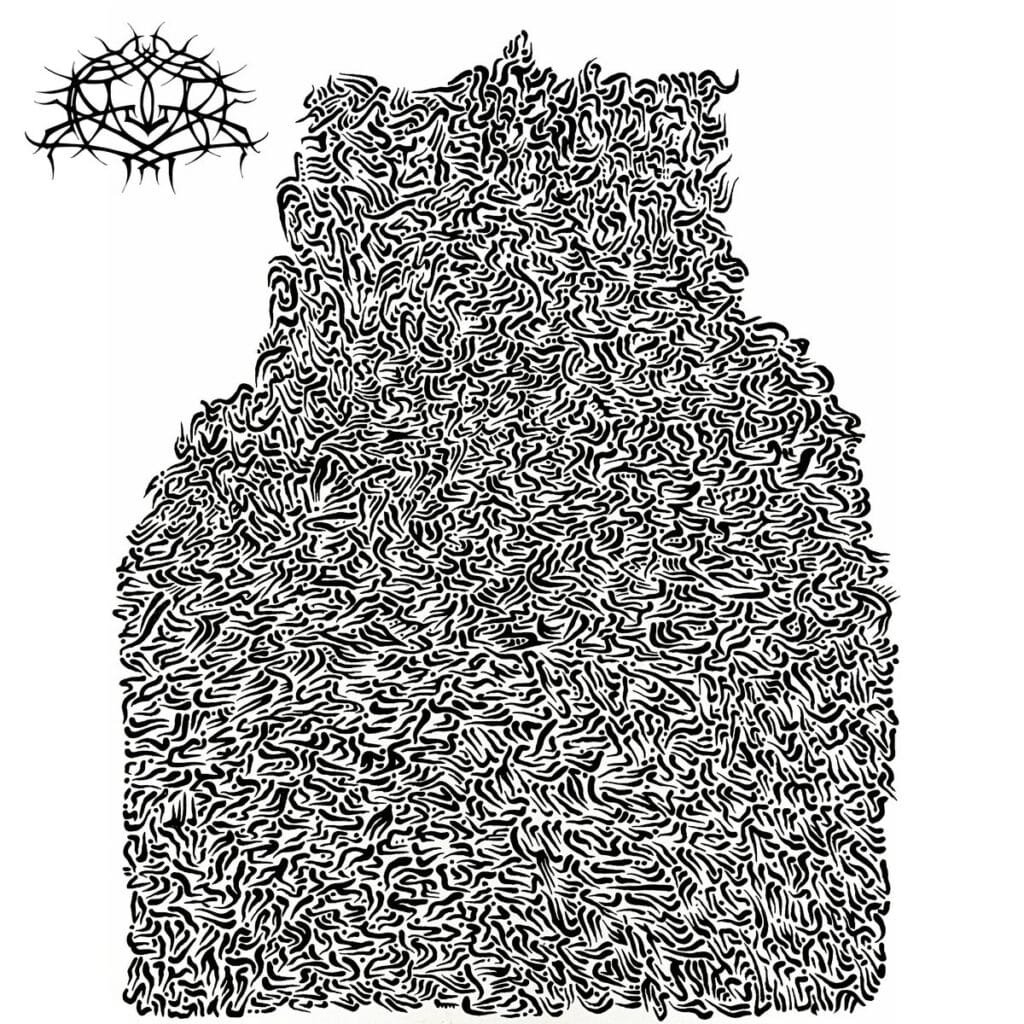
Tracks like “Living Useless Ritual” from Scour Order showcase a raging yet expansive sound. How does the new material differ from recent releases such as Inorganic Rites (2024), and what conceptual or musical themes drove the writing of this particular record?
The big difference is one of instrumentation. Inorganic Rites was the last full album we did with me on synths, McMaster on guitar and Mick on bass (although Mick and I did play some guitar on the record too). The music I’ve written on synths for Krallice has been much more atmospheric and simple. Most of the new album is denser and knottier in comparison (although the final song, which i wrote on guitar, is a little more in the simple/atmospheric realm). When I was writing on synths, I was much more inspired by sound-design, creating immersive textures, and minimalism. When writing on guitar, my brain goes more toward counterpoint, shifting meters and dissonance.
Krallice has historically focused more on writing and recording than extensive touring, though you’ve shared stages with bands like Wolves in the Throne Room, Gorguts, and Blood Incantation, and appeared at festivals including Roadburn. With your first-ever headlining European/UK tour approaching this fall, how are you approaching translating the studio complexity to the stage, and what does this milestone mean for the band?
It might sound like we are a band that uses the studio to create complexity, but really we are much more of a live band. The density we create is just through the use of polyphony in our arranging. We just haven’t focused on touring over the years, but all our music is practiced together and recorded live as a band (with a couple exceptions like Demonic Wealth and Mass Cathexis 2: The Kinetic Infinite). We are trying one of the songs from Demonic Wealth for the first time on this tour, and that album was a studio experiment never intended to be performed. So that’s been a fun and interesting challenge so far! What’s cool about this tour with us going back to the old instrumentation is that it allows us to mix old songs with current songs. We’ve rarely done that in the past, since we tend to usually just play whatever our current music is at the time of a concert. But for this tour, we are doing songs from the first four albums, Go Be Forgotten, Demonic Wealth and the new album.
Each of you maintains an extensive network of other projects (Orthrelm, Behold… The Arctopus, Gorguts, Dysrhythmia, and many more). How do these outside collaborations feed back into Krallice, and conversely, how has the band influenced your individual work outside of it?
All four of us enjoy making lots of work and collaborating with a variety of people on different-sounding music. Every project we work on helps inform every other in some way or another. I’ve always really appreciated the momentum Krallice has in terms of creating new music. Sometimes I’ll be frustrated at how slowly music is developed and realized in other bands, but having Krallice always there and always working on something new has been a great way to never let that frustration take over. It’s always been a thoroughly enjoyable process with those guys.
A big thank you to Colin for taking the time to talk to Inhale the Heavy!
Krallice will be on tour in Europe for the first time this fall. Check out the dates here.
Their latest release, Scour Order, which drops September 18 via Profound Lore, is available for pre-order on vinyl, CD, cassette and download.